Showing posts with label Mathias Eick. Show all posts

Monday, December 15, 2008

Jazz 08 Part Three: Top Ten Albums of the Year

I understand that it is now in verve for critics to replace their annual top ten lists with alphabetical, formless, un-fun lists of albums that are "the best, in this critic's humble opinion." Anyone who reads this blog knows by now that this sort of meaningless, politically-correct list isn't quite my style. Hence, I'm kicking it old-school: numbered from ten to one, here are the best jazz albums of the year. Feel free to disagree with the picks or lament the lack of your favorite record in the comments section:

10. "Invisible Cinema" by Aaron Parks: Parks, who is shaping up to be the pianist of choice for the current crop of youngsters on the jazz scene, made his Blue Note debut as a leader with "Invisible Cinema," a record with a ridiculously opaque plot that doesn't seem to actually matter. The music is like prog rock with jazz musicians; Mike Moreno's guitar pyrotechnics recall Pat Metheny and Johnny Greenwood in equal parts.

9. "The Remedy" by Kurt Rosenwinkel: With "The Remedy," Kurt Rosenwinkel has proved yet again that he deserves to be this generation's most influential voice on guitar. As opposed to playing licks, Rosenwinkel plays fluid, seemingly random lines. There is a tragic element of this record though; saxophonist Mark Turner recently lost two fingers in an accident, and the jazz scene's loss is monumental.

8. "Party Intellectuals" by Marc Ribot: PARTY PARTY PARTY PARTY... Marc Ribot's free-rock trio is so good that you forget that you're listening to a jazz musician who plays with John Zorn. Like last year's "Draw Breath," by The Nels Cline Singers, songs alternate between noisy, violent free improvisations and the loudest, booty shaking party music ever.

7. "Live" by The Brad Mehldau Trio: For my money, Brad Mehldau is the best piano player alive and working in the jazz idiom. While older musicians like Herbie Hancock and Keith Jarrett recieve all of the accolades, Mehldau has proven himself repeatedly with his trio on records like live. The interplay between him, bassist Larry Grenadier and drummer Jeff Ballard recalls both Jarrett's standards trio and Bill Evans' great trio, but creates music all its own. Mehldau covers pop songs ("Wonderwall" and "Black Hole Sun" here) without a hint of irony, and plays them like standards. Every track is a highlight.

6. "Kinsmen" by Rudresh Mahanthappa: Mahanthappa's septet on this record consists of a jazz quartet augmented by an Indian classical music trio. While there have been numerous other attempts to fuse the two musics, "Kinsmen" sounds like nothing else ever released in the jazz idiom. Saxophonists Mahanthappa and Kadri Gopalnath duel brilliantly on the tracks "Ganesha" and "Convergence (Kinsmen)."

5. "Crossing the Field" by Jenny Scheinman: "Crossing the Field," which features a full orchestra without sounding even remotely corny, is violinist Jenny Scheinman's best album yet. Her scrappy rural lyricism shines next to Bill Frisell's guitar and Jason Moran's piano, and her original compositions are alternatingly haunting, quaint, and beautiful. It makes sense that her other release this year was a set of spunkily sung versions of folk songs; her violin playing has the same weary, gorgeous quality as her voice.

4. "Esperanza" by Esperanza Spalding: Guilty pleasure of the year. Hands down. I could listen to Esperanza Spalding go on and on about her boy trouble for hours straight, and have. While her first album, "Junjo," was a straight-ahead date that showcased her bass playing, "Esperanza" is more of a contemporary R&B record with acoustic instruments and a latin-jazz tinge. Just listen to "Precious" and try not to get indignant about Esperanza's awful boyfriend (Can you believe he wanted her to change for him?), or, if you're in a jazz mood, get a hear of the catchy and wordless "I Adore You," the album's best track.

3. "The Door" by Mathias Eick: There are videos on youtube of Mathias Eick exploding with incredibly fast high-note runs, but that could not be further from "The Door." The quietest album of the year, "The Door" features the sort of lyricism expected from someone much older than the young Eick. His debut showcases the influence of earlier ECM artists and a little bit of the sound of his main gig, Jaga Jazzist, but really sounds like nothing else. If you could translate the feel and look of an intricate ice-sculpture into a jazz album, you would wind up with something a lot like "The Door."

2. "History, Mystery" by Bill Frisell: "History, Mystery" is easily Bill Frisell's most cohesive album since "Nashville," if not since "Have A Little Faith." The band is something like a who's who of the rural jazz movement: Jenny Scheinman and Eyvind Kang take up the strings, Ron Miles plays trumpet, and the perennial rhythm section of Tony Scherr and Kenny Wollesen anchors the proceedings. The album's sound is evocative of Americana circa 1950 or 1960; a melting pot of blues, country, bebop, soul, tango, Copland-style classical music and pretty much anything else Frisell sets his sights on. The record is set up as two different suites that go together, the first framed by different versions of "Probability Cloud," and the second by versions of "Monroe."

1. "Tragicomic" by Vijay Iyer: While "History Mystery" presents a beautiful fantasy version of the world, "Tragicomic" presents the world precisely as it is: dark, claustrophobic, complicated, and more often than not downright scary. Of course, Iyer treats it as a joke: the second track is named "Macaca Please" after former Virginia senator George Allen's now famous slur, while the music bludgeons you over the head like a blunt weapon. The album's only moment of respite, which comes in the form of a beautiful solo piano take on "I'm All Smiles" ends in an unsure vamp, and is almost immediately drowned out by the death march and subsequent riot of "Machine Days." Iyer's long-standing quartet with Rudresh Mahanthappa, Stephen Crump, and Marcus Gilmore has made a record that isn't for the faint of heart, but has more to say about the state of the world than most jazz. I said in April that this was going to be Iyer's year, and it was.

Friday, December 12, 2008

Jazz 08 Part Two: Superlatives!

Chances are you read my end-of-the-year essay on the state of jazz (I pronounced it alive and well, albeit in a sub-cultural way) and said to yourselves, "damn, what insight," but I'm glad to see that someone disagrees with me on Sonny Rollins. I have heard from numerous (occasionally reliable, but mostly drunken) sources that Sonny is as great as ever live. I heard his new record (review forthcoming), and I suppose it's good; there just isn't anything new or ground-breaking about it, especially in a year in which Marian McPartland plays free jazz and Lee Konitz releases albums with teenage wunderkinds. I also saw him live a year or so ago at Lincoln Center and was dully unimpressed; granted, word on the street is that Sonny has on nights and off nights going back to the fifties. Either way, the point of this post is not to argue about Sonny Rollins' relevance to the jazz world right now, but to name some superlatives as a companion piece to my top ten, which will make it to this site in the near future.

Biggest Upset: Jon Irabagon's surprising (yet well deserved) win at this year's Monk Competition

Craziest Saxophone Solo: Greg Tardy's absurdly funky, out choruses on Bill Frisell's version of Sam Cooke's "A Change is Gonna Come."

Most Likely to Cut An Idol: Rudresh Mahanthappa; just check out the fours he trades with Kadri Gopalnath on the title track of "Kinsmen."

Best Straight Bluegrass Record from A Jazz Musician: Charlie Haden's "Rambling Boy"

Most Meteoric Rise: This one's a tie. Esperanza Spalding, who was pretty much unknown outside of dorky jazz circles last year, released a hit record and was named Rising Star Bassist of the Year in Downbeat. Mathias Eick, who has played on every Norwegian record with a trumpet in the past few years, gained international acclaim at the final IAJE Conferencer ever and released one of the best albums of the year with "The Door."

Hippest Singer You've Probably Never Heard of: Becca Stevens

Jazz' Most Beloved Indie Pop Duo: The Bird and the Bee

Jazz' Most Beloved Bluegrass Duo: Chris Thile and Edgar Meyer

Movement to Gain Most Steam: Rural Jazz

Least Likely to Release an Album for Another Ten Years: Brian Blade

Most Predictable Yearly Downbeat Poll: This is a tough one. Most years this category would wind up being a tie between Downbeat's annual Critic's Poll and Downbeat's annual Readers' Poll, but I suppose the edge this year goes to the readers, who were so predictable that I wish I had done a "guess the Readers' Poll" feature.

Saturday, September 20, 2008

Two Good Downbeats? In One Year? Naaahhh...

It's true. Although it isn't quite as good as the Vijay Iyer-Jason Moran-Matthew Shipp cover which featured Jenny Scheinman and Kurt Rosenwinkel, the new Downbeat is absolutely killer. Can you remember the last time (discounting that issue, of course) that Downbeat managed to run feature articles on three real-live interesting musicians? Musicians whose music could actually be qualified as experimental? And this time the didn't even temper Bill Frisell's all-inclusive nature by calling him the Wynton Marsalis of, I dunno, Seattle. The other main articles are about William Parker (a free jazz musician!) and Tomasz Stanko (a EUROPEAN (occasional) free jazz musician!).

But, as always, the best section is the "Players" section (not to be confused with the "Playaz" section- originally created for Miles Davis); this time around it features my favorite young trumpet player at the moment, Mathias Eick. As much as I love Christian Scott and Ambrose Akinmusire, Eick is the only young musician (period.) who has anything approaching tact in his playing. And then, of course, there are the extremely interesting musicians that I'd never heard of that I am presently listening to (harpist Edmar Castaneda and Anne Mette Iversen in this issue). In all honesty, I occasionally wish that Downbeat were simply a 90 page "Players" section.

Granted, though, if it were I wouldn't be able to gripe about Downbeat's occasional faux pas. There was one I could find in this issue, and in all honesty it's pretty small and most people will not notice it. However, in spite of that, it is a huge faux pas. In a review of "In Sweden: November 22, 1950," critic John McDonough writes that "after a prolific 65-year recording career, [Arne Domnerus] remains active today at 83." Those of you who read this blog are aware of the fact that Domnerus is dead. Granted, he probably died after Downbeat went to press. But still.

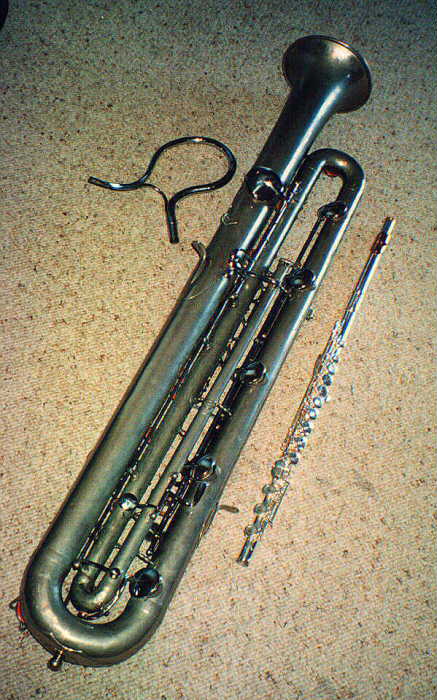
Also, in a random sidenote: would I be correct in saying that the contrabass sarrusophone is making a come-back in jazz in a big way? I saw not just one, but two references to the absurdly obscure, gigantic behemoth of a double-reed instrument in this issue. I'm almost tempted to turn it into a Where's Waldo style contest for you readers out there, but I'll give them away: James Carter owns two (TWO!!!! WHERE DOES HE FIT THEM?) of them, and Scott Robinson apparently plays one on his new record, "Forever Lasting" (HOW DO YOU PLAY IT?!).

Next time I'll have a round-up of some recent free-jazz recordings, including the new CD from the Anthony Braxton-Milford Graves-William Parker axis.

Monday, September 15, 2008

Different Angles from Jacob Young

By all possible counts, ECM is making a huge comeback. Between a reissue series that shows its catalogue in a new light, brilliant albums from old stalwarts (a smattering of new albums by Keith Jarrett's Standards Trio; Marylin Mazur's "Elixer"), and one of the best (if not the best) albums of the year from a young musician (Mathias Eick's recent "The Door"), ECM is beginning to really give the American labels a serious run for their money. Into this fray comes Jacob Young's "Sideways," a sort of statement of purpose from the stalwarts and young turks alike. Young has recorded before for ECM; in 2004, his "Evening Falls" made a splash amongst European jazz enthusiasts, but barely registered in the States. Hopefully "Sideways" is accessible enough to give Young some recognition; by the looks of it, however (two stars in downbeat?!), "Sideways" is going to be treated as "just another ECM record," which is a shame.

The real star of "Sideways" is not the leader, but the young Mathias Eick, who can be heard here- in all of his subtle glory- playing trumpet. While "Sideways" is neither as adventurous nor as beautiful as Eick's recent debut, "The Door," there are many similarities in the music; both albums feature a jarring amount of space, and both albums are interested in off-kilter melodies. The likenesses stop there, however, and the appearance of both a saxophone player and a guitar player differentiate the proceedings. There are more subtle differences however; whereas songs like "Williamsburg" and "December" on "The Door" merely hinted at melody, Young's approach on songs like "Slow Bo-Bo" is much more transparent. Eick plays beautifully on Young's songs, as does the saxophone player, Vidar Johansen.

The biggest problem with "Sideways" is that Young's own playing is not as memorable as that of his sidemen, or as memorable as his tunes. In addition to Eick and Johansen, the veteran drummer Jon Christensen- the player both in Keith Jarrett's famed European Quartet, and on Jan Garbarek's "Wichi-Tai-To," perhaps the greatest ECM recording ever- and the bassist Mats Eilertsen are here to liven up the proceedings. Add the brilliance of the other musicians to the aching beauty of songs like "Hanna's Lament," and Young simply gets lost in the mix. The only thing I have jotted down about Young's playing on this album (after having heard the album twice, mind you) is that it is "subtle." Go figure. In spite of this fact, however, I would unequivocally recommend this album, especially for fans of the brilliant Eick. If you are not aware of Eick's work, pick up "The Door" instead.

Tuesday, August 19, 2008

A Door Opens

Mathias Eick's "The Door," his first album as a leader, does not conjure up the object in its title. To my ears, "The Door" sounds more like a window peering out into a frozen plain; you can almost feel the cold breeze when you listen to the record in Eick's tones on trumpet, which are left to linger in soundscapes of his own creation. Like a frozen breeze, Eick's work is refreshing in an almost uncomfortable way, and "The Door" is the first album since Vijay Iyer's "Tragicomic" this year to give me chills. Eick, who is not yet thirty, wasn't even alive when fellow Norwegian Jan Garbarek was making his name with Keith Jarrett's European Quartet, but Garbarek's influence, and that of the other great early ECM artists like Bobo Stenson and Bill Frisell, can be heard in every note of "The Door." The "ECM sound" is all over the record, but it works. People complain about the wide open spaces inherent in ECM records, but they fit Eick like a glove.

In spite of all of the jazz, there is also a discernible pop influence in the young trumpet player's work, albeit a very subtle one. Unlike his other young counterparts here in the States, who wear their hip-hop and R&B influences like a glove, Eick is more interested in the feeling than the actual sound. "Williamsburg," the album's centerpiece, has a hook worthy of a pop song and contains a fair amount of improvisation, but builds like a classical work; it's impossible to pigeonhole the tune into any one genre, but the aesthetic is clear. "Williamsburg" isn't just meant to be heard, but to be felt. The band breaks down a few times, going into understatedly short, rehearsed free sections, before coming back with the song's insistent piano groove. Eick himself plays beautifully, imbuing the song with a quiet weight. For such a young player, Eick has already found an extremely individual voice; after having heard "The Door," I could never mix Eick's understated beauty up with the work of any of the plethora of other young trumpet players on the scene today.

His sidemen are not here to provide back-up, however; in spite of the fact that many tunes are developed in the traditional head-solos-head fashion, they are too textured to be mistaken for normal straight-ahead jazz. When Eick solos, the band solos with him: pianist John Balke, drummer Auden Klieve, and bassist Auden Erlien all double on various other instruments through-out the record to match Eick's various moods, and each member eggs the other on when the leader isn't soloing. Eick seems to be heralding something of a renaissance in Norwegian jazz, in spite of guest spots on all kinds of albums, his "The Door" is the first one to take the works of the older Europeans and add something substantial to them. "The Door" is possibly the most beautiful album I've heard all year, and it doesn't hurt that I've never heard anything quite like it. Highly recommended.